
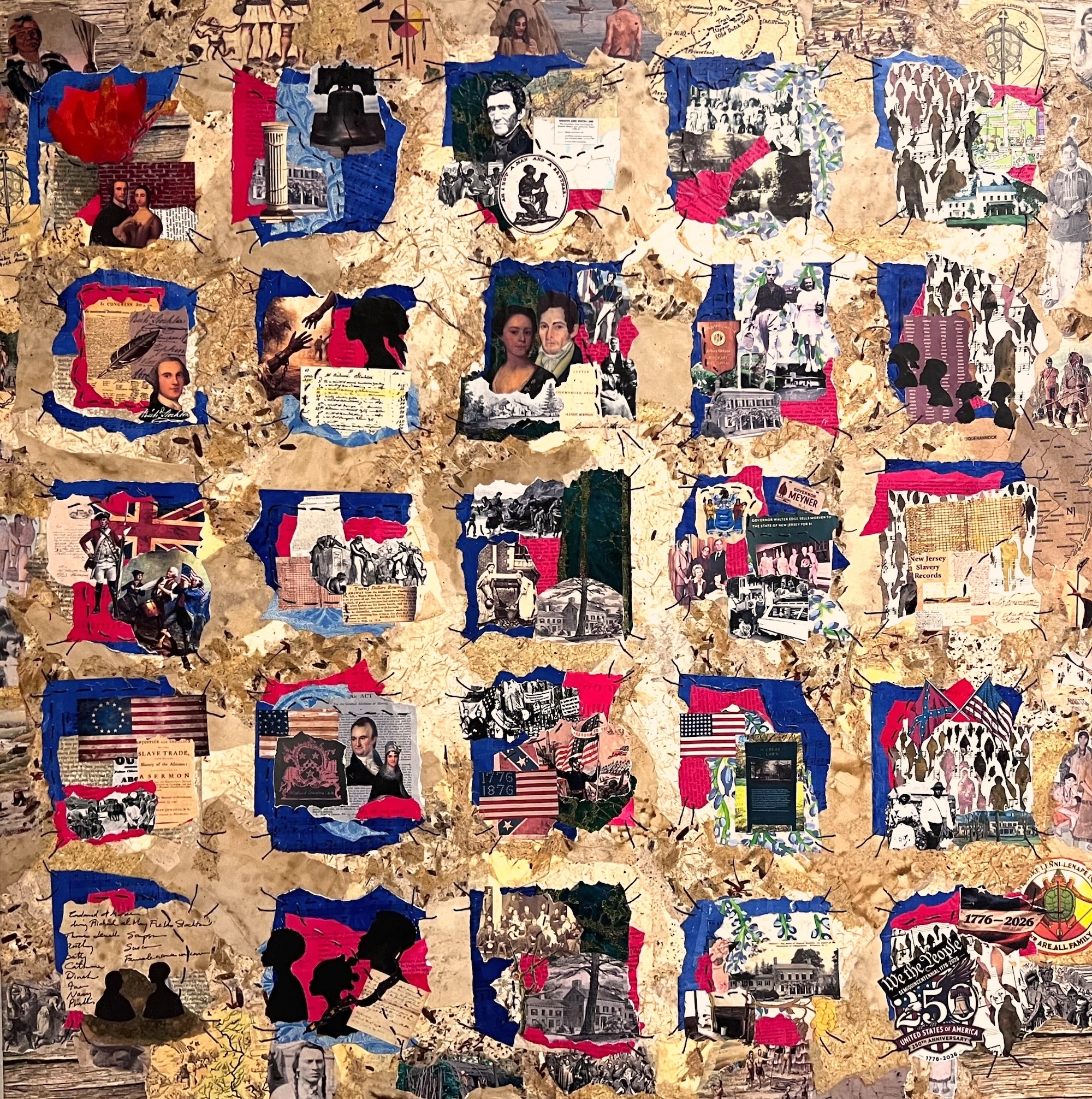
On exhibit: West Windsor Arts Council June 30 to Aug. 2, 2026
About my artwork: Morven: In Pieces
My work was created as one of 11 artists chosen to do artwork on the show, 11 for Semiquin. I was deeply inspired by the layered and often contradictory history of Morven Museum & Garden. As I explored the site, I was struck by the tension between the ideals of liberty and democracy associated with Morven and the realities of enslavement, exclusion, and marginalization that were also part of its history. The house embodies many of the complexities of the American story: it was home to a signer of the Declaration of Independence, later served as the governor’s residence, and now functions as a museum committed to reexamining and expanding the stories it tells.
My creation, Morven: In Pieces, reflects those layered histories through twenty-five individual fragments arranged in a grid, each representing a decade of Morven’s 250-year history. The fragmented format symbolizes both the passage of time and the way history itself is often experienced—in pieces, through partial records, incomplete narratives, and evolving interpretations. I incorporated archival imagery, historical documents, and symbolic forms to juxtapose the promises of freedom and democracy with the lived experiences of those who were denied those rights.
A significant influence on this work was learning more about the enslaved people who lived and labored at Morven, as well as the stories of Indigenous Lenape people whose presence on the land predates the house itself. By placing imagery of Lenape life around the border of the work, I sought to acknowledge both their original stewardship of the land and their historical marginalization. The inclusion of torn papers, obscured text, and fractured imagery reflects how some histories are preserved and celebrated while others are hidden, erased, or only recently reclaimed.
Contemporary issues of racial injustice, exclusion, historical erasure, and the ongoing struggle over whose stories are told and valued are central to this work. At a time when our nation continues to wrestle with questions of equity, truth, and identity, revisiting historic sites like Morven can help us confront both our achievements and our failures.